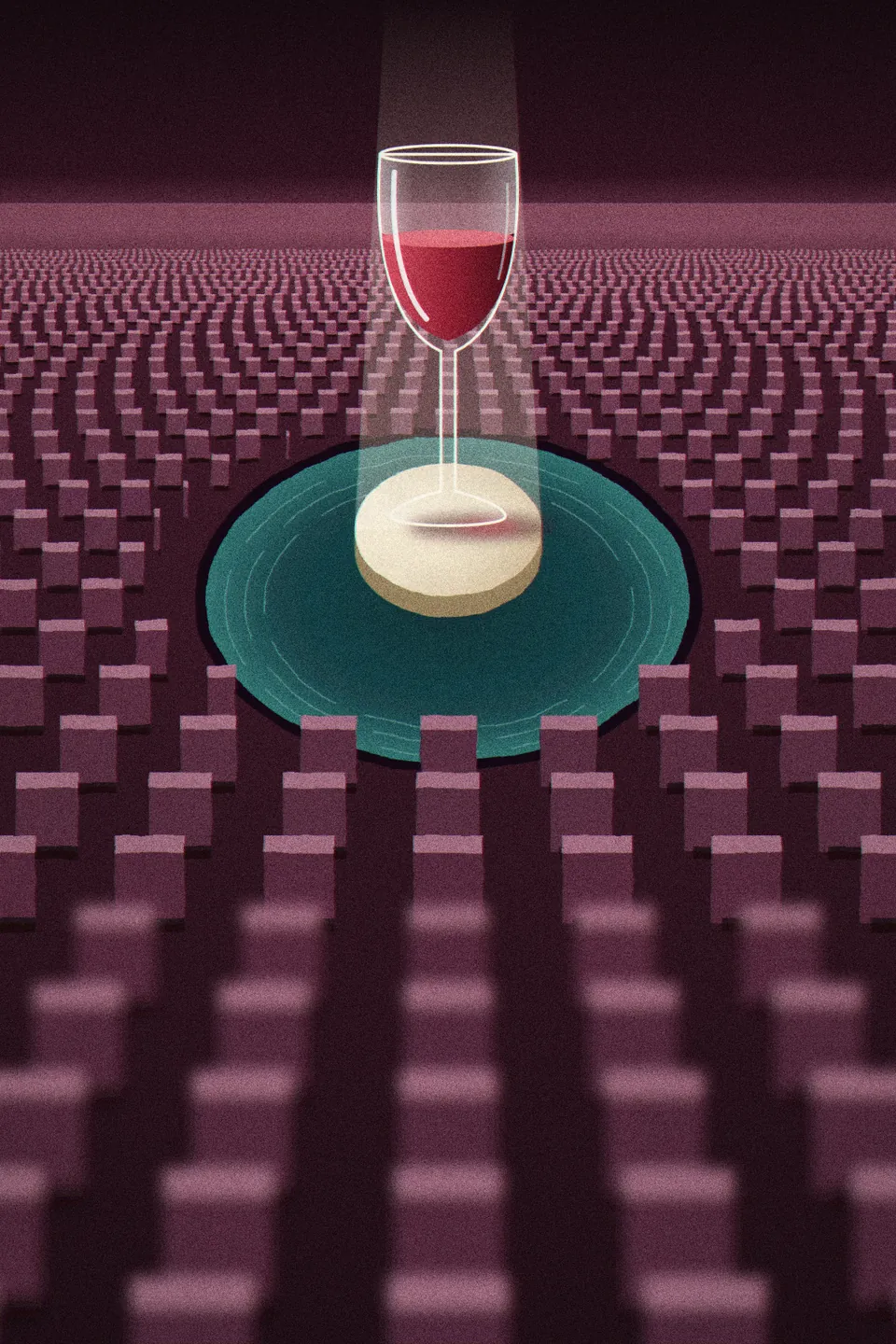
There is an old story about two men who were asked to judge a barrel of wine. The philosopher David Hume tells it in his 1757 essay Of the Standard of Taste, borrowing it from Don Quixote.
The first man takes a sip and says the wine is good, except for a faint taste of leather. The second agrees it is good, except for a faint taste of iron. Everyone laughs at them. Then the barrel is emptied, and at the bottom they find an old iron key tied to a leather strap.
Both men were right. They had simply noticed something everyone else missed.
That is what taste is. And it is about to become the most valuable thing a person can have.
The cost of making just went to zero
For all of history, making things was hard. Writing a good essay took days. A decent illustration took years of training. A working app took a team. Because making was expensive, the ability to make was valuable, and the people who could do it well were paid for the doing.
That is changing fast. A model can now produce a thousand paragraphs, a hundred logos, ten versions of a landing page and a working prototype before lunch. Most of it is competent. Some of it is quite good. Almost none of it is right without a human deciding what right means.
When the cost of producing something drops towards zero, the bottleneck moves. Making the thing stops being the hard part. The hard part becomes knowing which of the thousand things to keep, which to throw away, and what to change in the one you keep.
That is choosing. And choosing well has a name.
When anyone can make anything, the scarce skill is knowing what to keep.
What taste actually is
People often talk about taste as if it were a mysterious gift, or just a polite word for personal preference. It is neither.
Taste has two parts.
First, perception. You notice differences that other people do not. The leather and the iron. The slight imbalance in a layout, the sentence that runs one clause too long, the moment in an app where the user hesitates for half a second. A person with untrained perception looks at two designs and sees two designs. A person with trained perception sees forty small decisions, most of which went wrong in one and right in the other.
Second, judgment. Not every difference matters. Taste includes knowing which details serve the purpose of the work and which are noise. A great editor does not fix everything. They fix the three things that change how the piece lands and leave the rest alone.
Notice what taste is not. It is not a preference for expensive things, or minimalism, or whatever is fashionable this year. Someone can have excellent taste in a loud, crowded, colourful style. Taste is about fit: how well the choices serve what the work is trying to do.
The gap nobody warns you about
The radio host Ira Glass once described something that every person who makes things eventually feels. He said, roughly, that people get into creative work because they have good taste. Then, for years, their own work disappoints them, because their taste is good enough to see that what they make is not yet good. Most people quit in that gap. The ones who keep going close it by doing a large volume of work.
This is worth sitting with, because it flips how you should feel about frustration. If you can tell your work is mediocre, that is a sign your taste is developing. People with no taste are often perfectly happy with what they make.
It also explains something about AI-generated work. A model can close the skill gap for you instantly. It cannot close the taste gap. If you cannot tell the difference between a good result and an average one, the model will happily hand you average forever, and you will not notice.
How taste gets built
Taste feels innate because we only see it once it is formed. But every person with great taste built it, usually through four habits.
1. Deep exposure to the best work. You cannot recognise excellence you have never seen. Musicians listen to thousands of hours of music. Good writers have usually read far more than they have written. Read the classics in your field, study the products people still talk about decades later, look at the work that practitioners admire, which is often different from what the public admires.
2. Close comparison. Exposure alone is passive. Taste sharpens when you put two things side by side and ask why one works better. Two openings of a novel. Two onboarding screens. Two versions of your own paragraph. The comparison forces your perception to become specific.
3. Putting reasons into words. "I like it" is a reaction. "I like it because the first line makes a promise and the last line keeps it" is the start of taste. Explaining why turns a vague feeling into something you can reuse, teach and test.
4. Making a lot. Taste and skill grow together. The act of making shows you a thousand small decisions that a pure observer never notices. You only really understand why a sentence works after you have written a hundred that do not.
There is also a simple way to test whether your taste is improving. Make predictions. Before a launch, guess which version users will prefer. Before you show a draft to someone you respect, write down what you think they will criticise. Over months, you will see your guesses get closer, and you will see exactly where your perception is still blind.
The Islamic world has an old, beautiful example of this process. Classical calligraphers trained for years under a master, copying the master's letters again and again, comparing each stroke against the model. Only when the master judged the student ready did the student receive an ijazah, a licence to sign their own work. The tradition did not assume taste was a gift. It assumed taste was transmitted by long, patient, specific practice under someone who already had it.
Taste in the age of the machine
So what changes when a model can generate on demand?
Mostly, the loop gets faster. In the past, an architect might sketch a few versions of a building. Now you can see two hundred. That is a gift for someone with taste, because they can explore far more of the possibility space and choose the best. It is a trap for someone without taste, because two hundred options and no way to judge them is just noise.
A few practical shifts follow:
- Your job becomes more like an editor's. You frame the problem, generate options, and then cut ruthlessly. The cutting is where your value lies.
- Specific instructions beat vague ones. "Make it better" produces average. "The second paragraph is too abstract, give me one concrete example from a real city" produces something you can use. Taste is what lets you be specific.
- Restraint becomes visible. When everyone can add more, the person who leaves things out stands apart. The products people love are often defined by what they refused to include.
- Your references become your edge. Two people using the same model with the same prompt get similar results. Two people with different taste, built from different reading and looking and listening, ask for different things.
In his 2005 Stanford commencement speech, Steve Jobs said that a calligraphy class he sat in on at Reed College, after dropping out, ended up shaping the typography of the first Mac. You do not have to romanticise him to take the point. The inputs you choose to absorb, often for no practical reason, become the standards you later hold your work to.
Why taste is a moat
A moat is something competitors cannot easily cross. Money can be raised. Code can be copied. Models get cheaper every year and are available to everyone at roughly the same price.
Taste is different. It is built slowly, over years of exposure and practice, inside one person's head. It cannot be downloaded or bought off the shelf. Two companies with identical tools will produce very different products if one of them has a person who can look at a screen and say, quietly and correctly, "this is wrong, and here is why."
That person is the one who tasted the leather and the iron when everyone else just tasted wine.
In an age of infinite output, the most valuable creative act is often deleting.
The machines will keep getting better at making things. Let them. Your job is to know which of those things deserves to exist, and to have the nerve to throw the rest away.
Further reading
- Of the Standard of Taste — David Hume
- Taste for Makers — Paul Graham
- The Creative Act — Rick Rubin