In the early 1900s, the French colonial government in Hanoi had a rat problem. The city had built a modern sewer system, and the sewers had become a highway for rats, which carried the threat of plague into the nicer parts of town.
So the authorities did something that sounded sensible. They offered a bounty. Bring in a rat's tail, get paid.
People brought in tails. Lots of them. Then officials began noticing rats running around the city without tails. Hunters had worked out that a living rat with no tail could still breed, and more rats meant more tails, and more tails meant more money. There were reports of people raising rats on purpose.
The policy did exactly what it was designed to do. It paid for tails. It just did not get rid of rats.
The first step is always easy
The Hanoi story is funny from a distance, but the people who designed the bounty were not fools. They made a mistake that almost everyone makes, almost every day: they thought one step ahead and stopped.
First-order thinking asks: what will this do? Paying for rat tails will make people kill rats. Fewer rats. Done.
Second-order thinking asks the next question: and then what? People will want the money. What is the cheapest way to get the money? Is that the same as killing rats? If not, what will they actually do?
The economist Thomas Sowell spent much of his career pushing people to think beyond what he called stage one: the immediate, visible, intended effect of a decision. Stage one is where most debates stop. Stages two and three are where most consequences live.
Investors talk about the same idea. Howard Marks calls it second-level thinking. A first-level thinker says a company is great, so buy the stock. A second-level thinker asks what everyone else already believes about the company, what is already in the price, and what would have to be true for the stock to do well from here.
Different fields, same move. Look past the first domino.
People are not furniture
The rat bounty failed for a reason that shows up again and again: it treated people as if they would stand still while the rules changed around them.
People do not stand still. They adapt to whatever is being rewarded, and they are very creative about it. Any time you attach a reward to a number, someone will find a way to move the number that you did not intend.
This is why companies that pay salespeople only on signed deals end up with lots of signed deals and unhappy customers who cancel later. It is why a team measured on tickets closed learns to close tickets quickly rather than solve problems properly. It is why school systems that judge teachers on test scores often get very good at test preparation and not much better at education.
None of these people are villains. They are doing what they are paid to do. The designer forgot to ask: if I were in their shoes, and I wanted the reward, what is the easiest way to get it?
If you reward a number, you will get the number. Whether you get the thing you wanted is a separate question.
Systems push back
Sometimes the second-order effect comes not from people gaming a rule but from the system itself reacting in a way nobody expected.
In 1935, Australia brought cane toads, native to the Americas, into Queensland to eat beetles that were damaging the sugar cane crop. On paper, it was elegant: a natural predator to deal with a pest, no chemicals needed.
The toads did not do much about the beetles. They did, however, do extremely well at breeding. They were poisonous to many native animals that tried to eat them, and they had few natural enemies. They spread across huge parts of the country and became one of the most famous ecological disasters in Australian history.
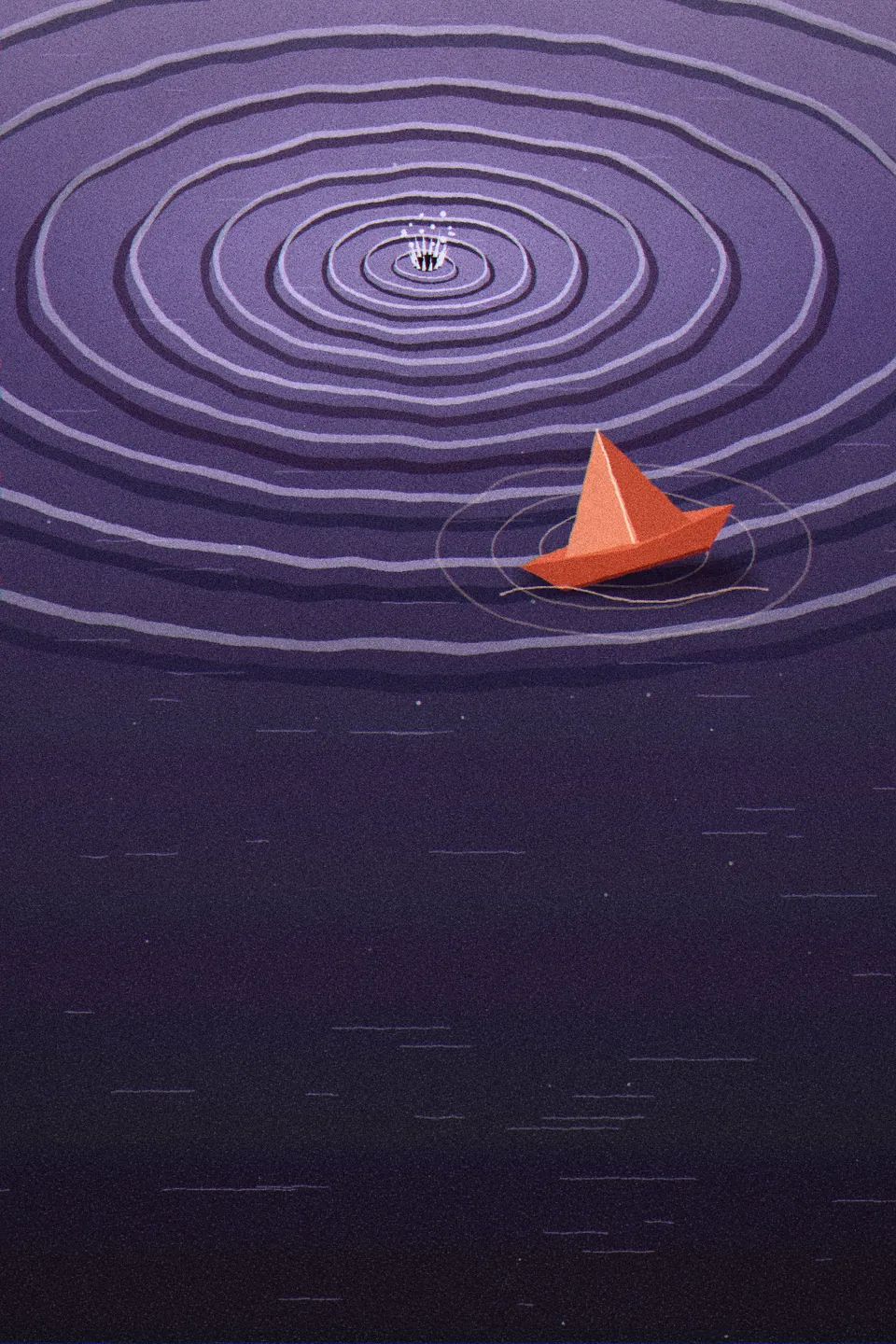
The ecologist Garrett Hardin had a phrase for this kind of thing, sometimes called his first law of ecology: you can never do merely one thing. Every intervention in a connected system ripples outward. The question is not whether there will be side effects, but which ones, and whether you have looked for them.
Then there is the case where success itself causes the surprise. In 1865, the English economist William Stanley Jevons wrote The Coal Question. Steam engines were becoming far more efficient, using less coal for the same work. You might expect that to reduce how much coal Britain burned. Jevons argued the opposite. Cheaper work meant steam power became worth using in many more places, so total coal use went up.
That pattern, now called the Jevons paradox, still shows up constantly. Make something cheaper and easier, and people often do far more of it. Make computing cheaper and, instead of using less, we find a thousand new uses for it.
Seen and unseen
In 1850, the French writer Frédéric Bastiat wrote an essay usually translated as That Which Is Seen, and That Which Is Not Seen. Its most famous part is a parable about a broken window.
A boy breaks a shopkeeper's window. A crowd gathers and someone points out a bright side: the glazier will get work, and he will spend that money, and so the broken window is good for the economy. Bastiat's reply is simple. What you see is the glazier getting paid. What you do not see is the pair of shoes, or the book, that the shopkeeper would have bought with that money if his window had not been broken. The town is not richer. It is down one window.
The lesson reaches far beyond economics. Every choice has a visible result and an invisible cost: the thing that would have happened instead. Second-order thinking is partly the discipline of asking about the shoes you will never see.
Why the long way often looks wrong
There is an uncomfortable implication in all of this. Many of the best long-term decisions look bad at the first step.
Spending a year building infrastructure instead of shipping features looks slow. Turning down a big client who would distort your product looks like leaving money on the table. Paying people fairly when you could squeeze them looks expensive. Studying fundamentals instead of chasing whatever is trending looks like falling behind.
At stage one, the shortcut wins every time. At stage three, it often loses badly.
This is actually good news if you are willing to think further than others. If most people stop at the first step, then the moves that only pay off at the second or third step are underpriced. Fewer people are competing for them. The patient path is less crowded precisely because it looks wrong for a while.
A small habit
You do not need a framework or a spreadsheet to think this way. You need a habit, and the habit is three words long.
When you are about to make a decision that matters, ask and then what? Then ask it again about the answer. Two or three rounds usually reveal something the first round missed.
A few questions help make it concrete.
- Who is affected, and how will they respond? Not just customers, but competitors, employees, regulators and partners.
- What is being rewarded? If people optimise for exactly this, and nothing else, what happens?
- What happens if this works much better than expected? Success brings its own problems: scale, copycats, rising expectations.
- What will I not see? What is the cost of the option I am not choosing?
- What will this look like in ten years, not ten weeks?
There is one more tool worth keeping close, usually credited to G. K. Chesterton. If you find a fence across a road and cannot see why it is there, do not tear it down until you find out. Things that look pointless are often the leftover answer to a second-order problem someone else already solved.
The question that keeps working
Second-order thinking will not make you a prophet. The world is too complicated, and some consequences will always surprise you. The Hanoi officials could have thought harder and still missed something.
But most expensive mistakes are not deep mysteries. They are failures to take one more step. The toads, the tails and the broken window were all visible to anyone who paused for a moment and asked what would happen next.
So pause. Make the obvious move in your head, and then watch what everyone does in response.
The first domino is the one everyone sees. The game is usually decided by the third.
Further reading
- Basic Economics — Thomas Sowell
- The Most Important Thing — Howard Marks
- Thinking in Systems — Donella H. Meadows